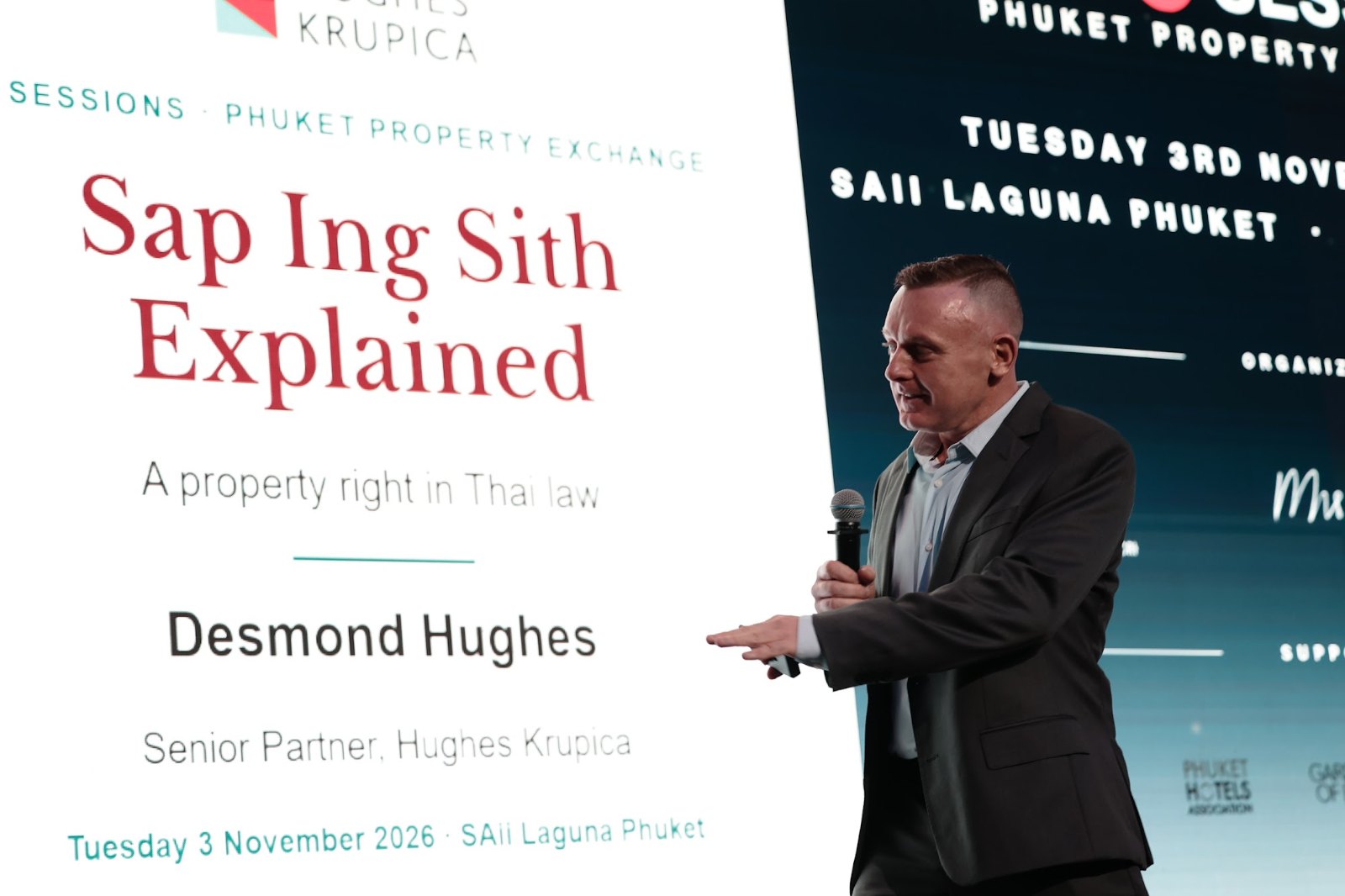
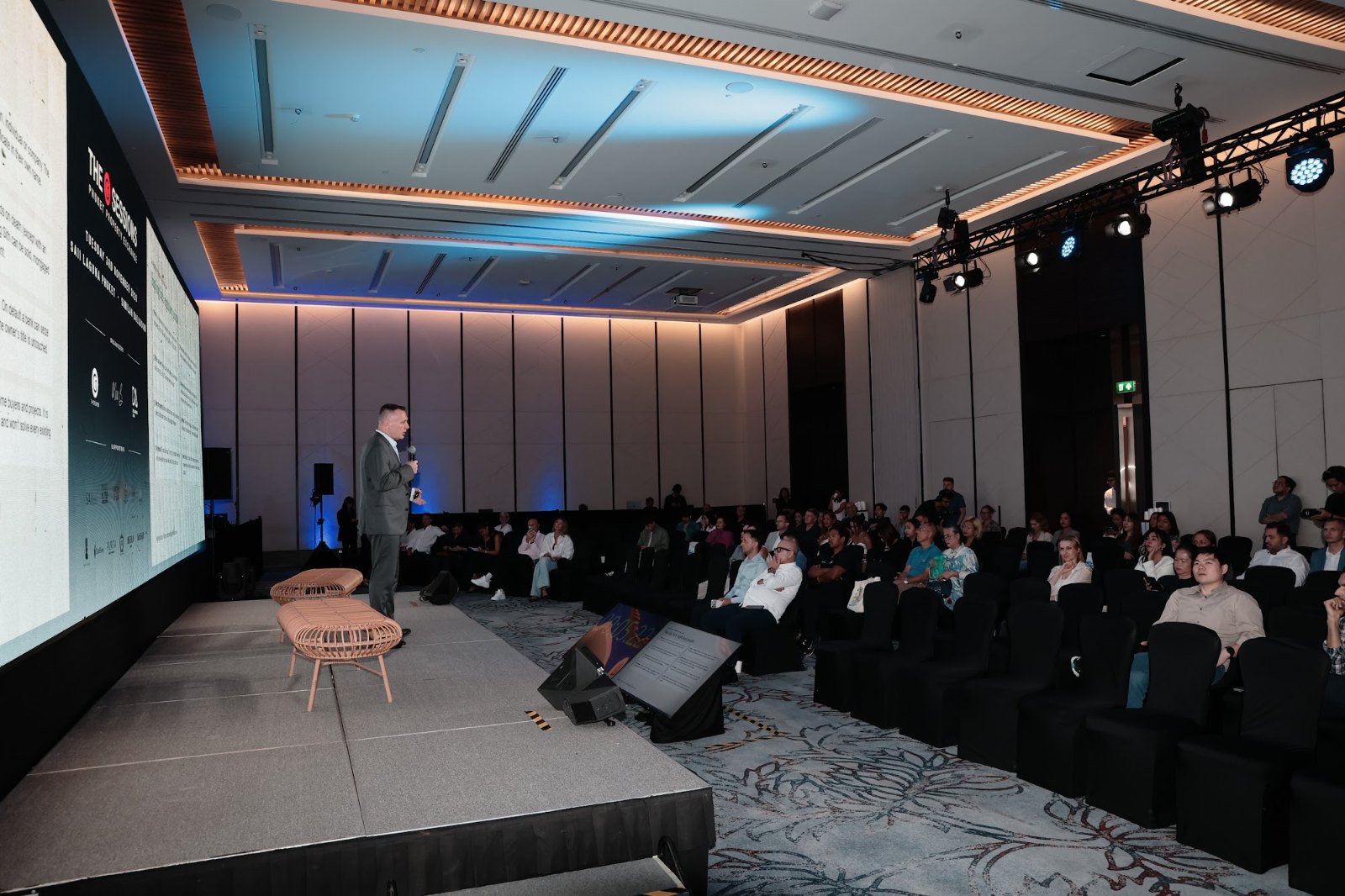
On 3 November 2026, our Senior Partner Desmond Hughes spoke at C9 Sessions – Phuket Property Exchange at SAii Laguna Phuket. His subject was Sap Ing Sith, a property right that has been available in Thailand since 2019 and comes up in almost every conversation we have with foreign buyers and developers. These are the eight points he covered.
1. What it is
Sap Ing Sith is a right to use someone else’s land, house or condo unit as if you owned it, for up to 30 years. It is registered at the Land Office under the Sap Ing Sith Act B.E. 2562 (2019), which was introduced to turn a right of use into an asset that can be traded and borrowed against.
2. Who can hold it
There is no nationality restriction. A Thai or foreign individual, or a company, can hold the right. The holder receives their own Land Office certificate – in effect a second title document in their name – which is why foreign buyers are interested.
3. What it can cover
Titled land (Chanote), land with buildings, or a whole condo unit. It cannot be granted over possessory land (Nor Sor 3, Nor Sor 3 Gor) or ALRO land. It covers the whole parcel or nothing: the plot cannot be split or merged while the right is registered, and the landowner needs any mortgagee’s written consent before granting it.
4. It is not a lease
A lease is a personal contract. It ends on the tenant’s death and cannot be assigned without the landlord’s agreement. Sap Ing Sith can be sold, mortgaged and inherited without the owner’s consent, and if the landowner sells or dies, the right carries on.

5. Using the property
The holder can renovate, build and rent out without the owner’s consent, although daily villa rental still needs a hotel licence. Buildings the holder puts up belong to them during the term and then pass to the landowner, unless the contract says otherwise – for example, demolition or compensation. This is best agreed on day one.
6. Bankable
The right can be mortgaged. On default, it is seized and auctioned for the remaining term, and the landowner’s title is not affected. Lenders’ appetite in practice is still developing.
7. No renewal
There is no extension mechanism. At year 30, the parties must register a new right, with new fees and tax. It is the same issue as “30 + 30 + 30” leases: a promise to renew is only as good as the person giving it. Put security behind it, and value the asset on what is actually registered.
8. Where it fits
Sap Ing Sith suits a new purchase where a Thai owner is willing to grant it, and some developer structures. It is not ownership, it ends at 30 years and it costs more than a lease: a 20,000 baht establishment fee, a 10,000 baht certificate fee, a 2% transfer fee, and Specific Business Tax of 3.3% on a transfer for value.
For advice on Sap Ing Sith or your own property holding, contact Desmond at [email protected].